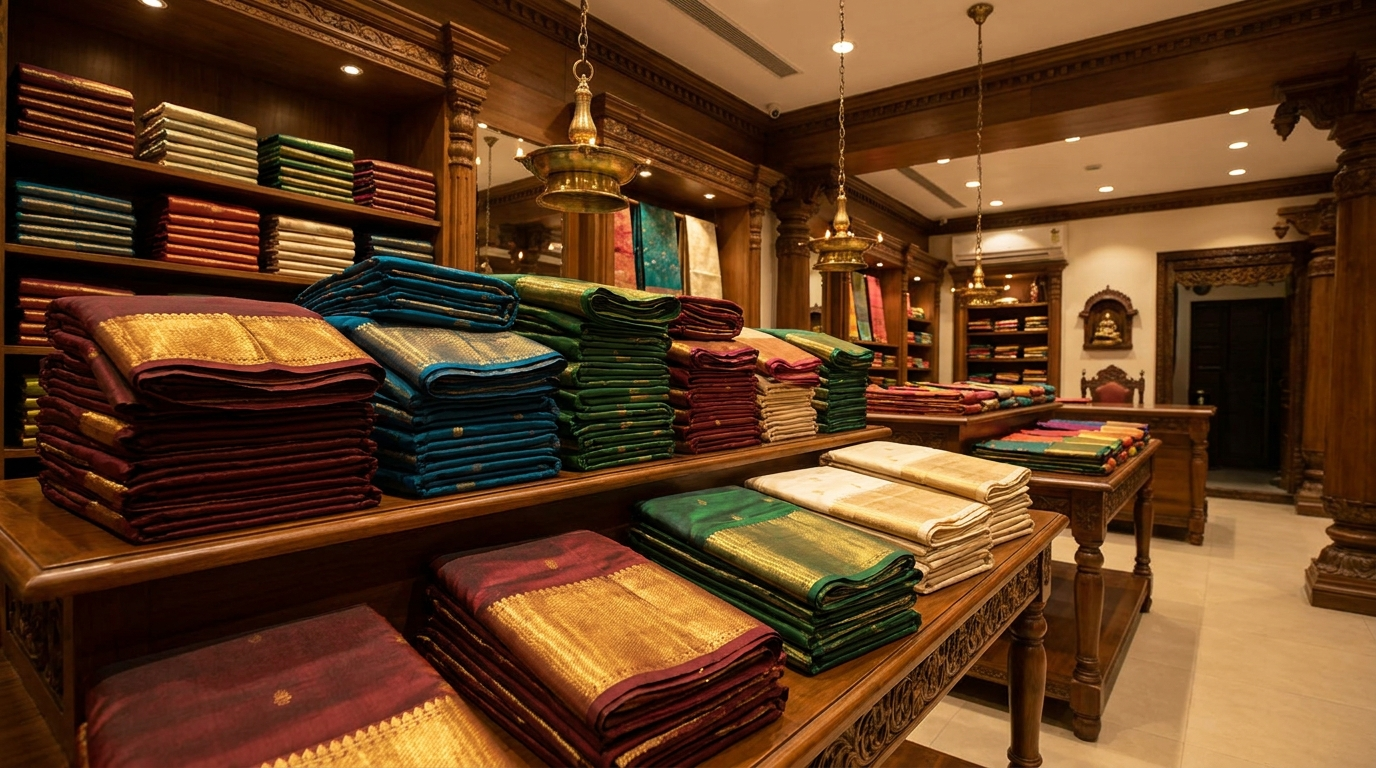
Our History
One hundred and sixty years
of pure silk
From a single shop on Dodda Pete in 1860 to the seventh generation today - the story of a family, a city, and the finest mulberry silk in the land.
Chapter One · 1860
A shop on Dodda Pete
Our forefather L. Kadaiah hailed from Laderpet, near Sira in Tumkur district. Like many enterprising weavers and merchants of his generation, he was drawn to Mysore - then the seat of the Wadiyar maharajas and one of the great cultural capitals of southern India. In the year 1860, during the reign of H.H. Maharaja Krishnaraja Wadiyar III (Mummadi), he established a store on the main thoroughfare of the day: Dodda Pete, known today as Ashoka Road.
Mummadi's Mysore was a city of scholars, musicians and craftsmen. The court's appetite for fine textiles was legendary, and a merchant who could supply true handloom silk - honestly woven, honestly priced - earned something more valuable than money: trust. That trust became the foundation on which six generations have since built.
Chapter Two
Weavers to the court
Ever since that first shop opened its doors, our family has produced handloom silk sarees and textiles for the erstwhile Mysore royal family, for the Heggades of Dharmasthala, and for the discerning citizens of the old Mysore region. Sarees for weddings in the great houses, dhotis in traditional yardage for ceremonies, and the turbans of the durbar - each order was a renewal of the family's covenant with its patrons.
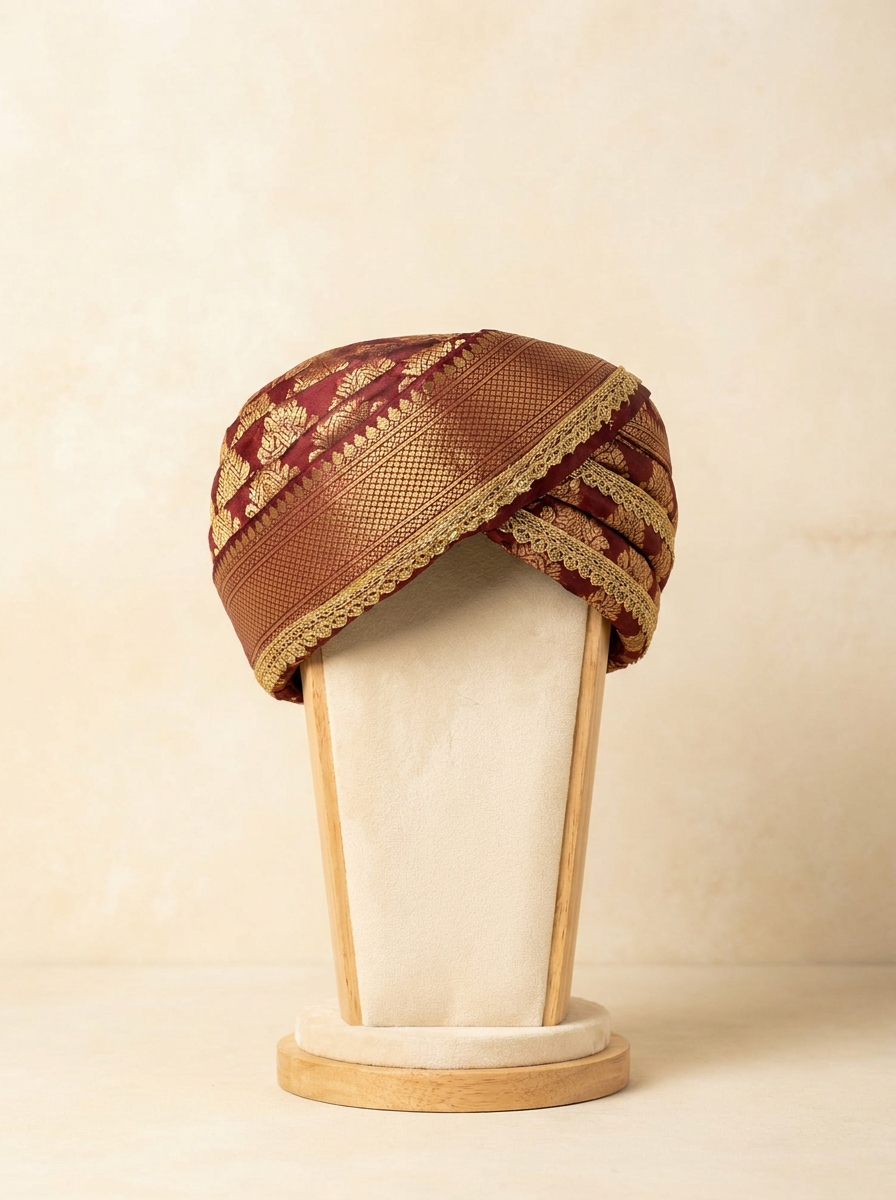
The Mysore Peta deserves its own telling. In the durbar of the Wadiyars, the peta was no mere head-dress - it was rank, honour and identity, tied in silk and brocade, often edged with gold lace. To be presented a peta was to be recognised. Our house has woven and supplied these turbans through the generations, and we still make them today, pre-formed for modern wear but true to the durbar style.
Chapter Three
Why Mysore means silk
Mysore's love affair with silk is older than our house. Mulberry sericulture took root in the kingdom in the late eighteenth century, and under the patronage of successive rulers the region around Mysore and Bangalore became - and remains - the heartland of Indian mulberry silk. The thread reeled here is prized for its fineness, its lustre and its strength.
It is this sensuous mulberry silk that our weavers craft into handlooms - with traditional motifs handed down across generations, and with modern designs for the tastes of today. Every genuine piece we sell carries the Silk Mark certification, the assurance of the Silk Mark Organisation of India that what you hold is pure silk, nothing less.
Chapter Four
The craft in our keeping
Sarees
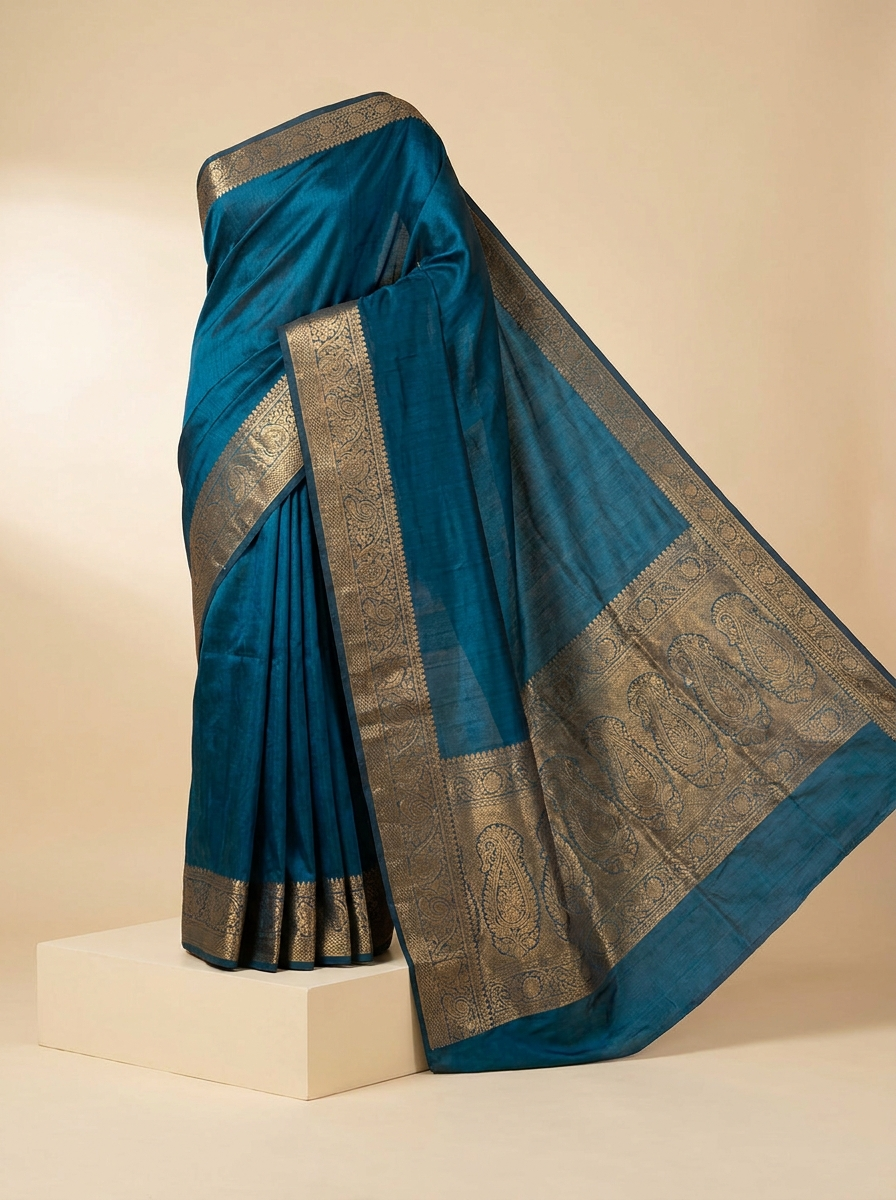
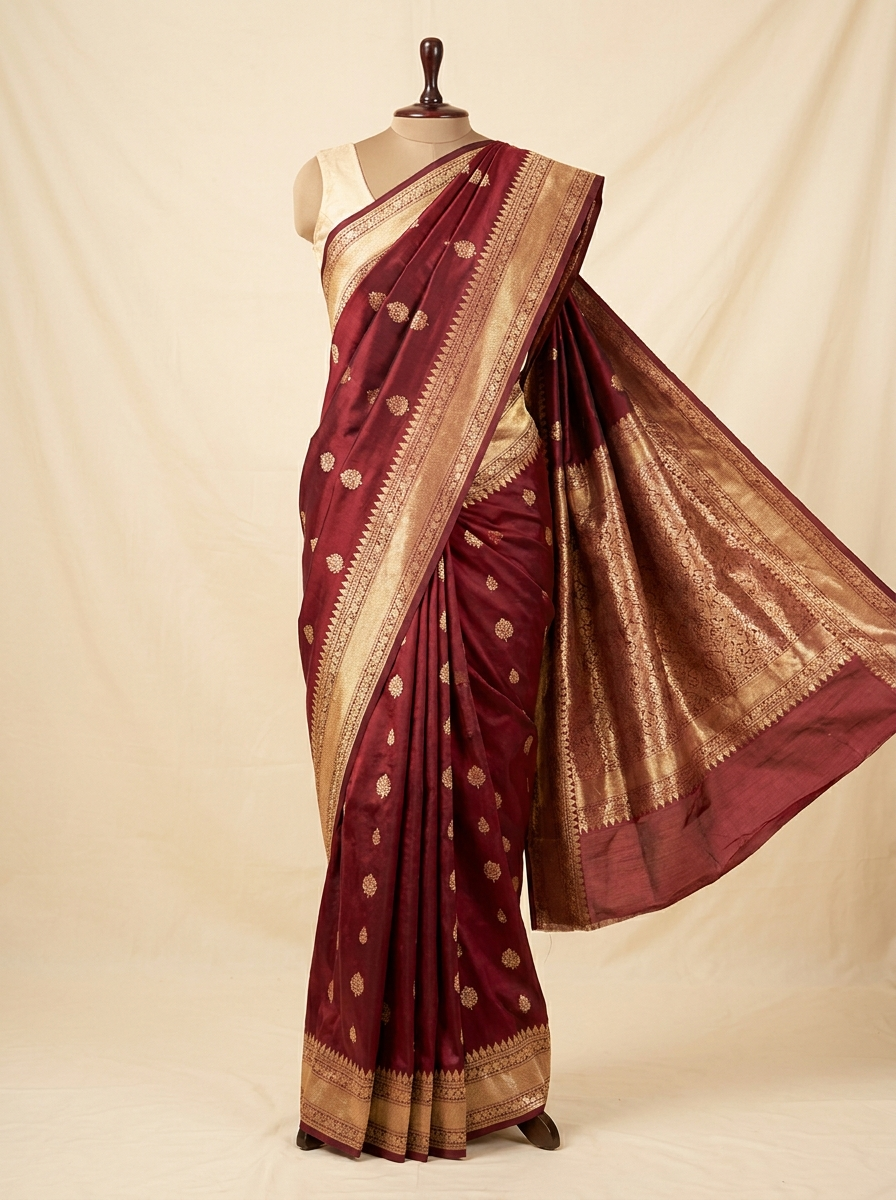
Pure mulberry silk woven with zari borders and butta - bridal heirlooms, festive drapes and the feather-light Mysore crepe for every day.
Dhotis
Traditional 9×5 and ceremonial yardage with gold, silver and temple borders, woven for grooms, ceremonies and every family celebration.
The Mysore Peta
The durbar turban of old Mysore in silk brocade with zari tail-pieces - worn at weddings, felicitations and honours, flaunted with pride.
Honour Shawls
The treasured shawls presented by temples and institutions to their patrons - a speciality of our house, with custom emblems woven into the border.
Milestones of the house
1860
The first store
L. Kadaiah establishes the shop on Dodda Pete (today's Ashoka Road), Mysore, in the reign of H.H. Krishnaraja Wadiyar III - Mummadi.
1800s-1947
The durbar years
The house weaves for the Mysore royal family, the Heggades of Dharmasthala and the nobility of old Mysore, through the golden age of the Wadiyar court.
1900s
Generations of trust
Sons and grandsons carry the shop forward as Mysore grows from princely capital to modern city; the clientele grows with it, but the looms stay traditional.
2000s
Silk Mark era
The house adopts the Silk Mark certification - an independent guarantee of pure silk for a new generation of customers.
Today
Six generations on
The 6th and 7th generations run L. Kadaiah Mayuur Silks from Nazarbad, Mysuru - blending hereditary craft with an eye for modern fashion, and now bringing the store online.
“Celebrate your happy occasions by draping our sarees and dhotis.
Flaunt our traditional turbans with pride.”
- The house of L. Kadaiah, since 1860
Shop the collection